There's something about the first real snowfall in the Rockies. The trails go quiet, the views get even better, and a well-built Subaru is right at home. But winter also punishes a build that isn't ready for it. The right setup can mean the difference between an epic day in fresh powder and a long wait for a tow truck.
Here's how we get a Subaru ready for winter, based on years of driving, camping and installing parts through Alberta winters.
Everything starts with your tires. Your AWD system, your lift and your skid plates can only do so much if your tires can't grip. The catch is that "winter" can mean two very different conditions, and the best tire for one isn't always the best for the other.
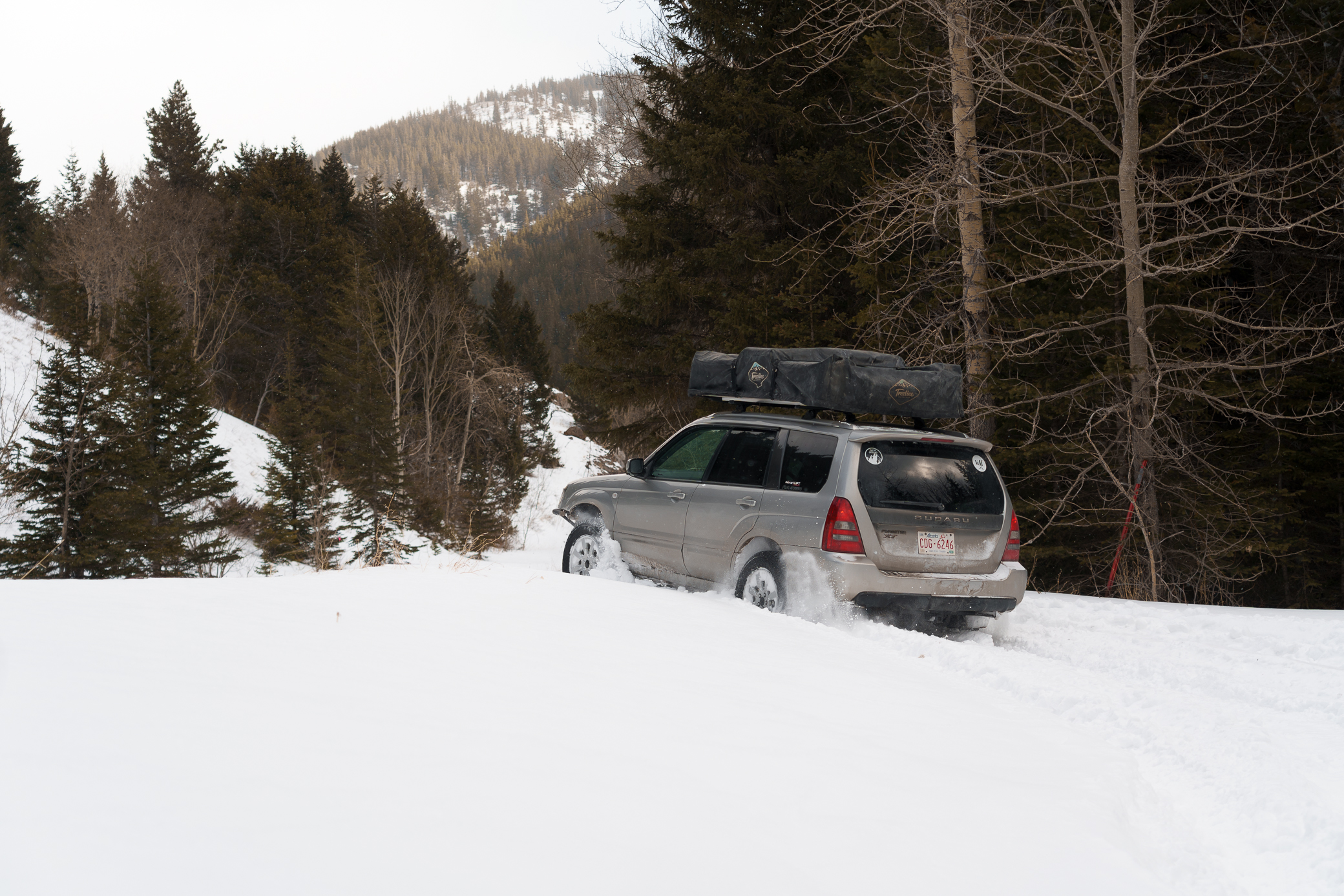
When the snow gets deep, aggressive tread is king. Big, open lugs act like paddles, digging in and pushing snow out of the way. When you're aired down, they also flex and clear themselves out, so they keep finding something new to bite into.
Mud-terrain tires are especially good in deep snow because of how snow traction actually works. A lot of your grip comes from snow packing into the gaps between the lugs, and that packed snow grabbing the snow underneath it. Big voids hold more packed snow, then clear it out as the tire rolls so the next lug can do it again. That's why you'll see plenty of people running mud-terrain tires in the snow. On a snowed-in forest service road or an unplowed trailhead, a mud or aggressive all-terrain tire pulls through snow that would pack up a tighter tread and leave you spinning.
Size matters here too. A taller tire on a lifted Subaru gives you more clearance and more room to air down, so you float over the snow instead of plowing through it with your bumper. If you're still planning your lift, our Best Subaru Lift Options for Every Build guide covers which setups make room for bigger tires.
Ice is a totally different story. Big lugs don't help much on a sheet of ice, because there's nothing to dig into. On ice, what matters is the rubber compound and the siping.
A dedicated winter tire uses a soft compound that stays flexible well below freezing, plus thousands of tiny sipes (small cuts in the tread) that grab onto slick surfaces. Mud-terrain tires use harder rubber built to resist cuts and chips on rocks, and that rubber gets stiff in the cold. So a mud tire that crushes deep snow can feel surprisingly sketchy on an icy highway or a frozen parking lot.
For most people, most winter driving in Alberta happens on packed, icy roads rather than deep backcountry snow. If that sounds like you, a dedicated winter tire is still the safest choice.
If you want one tire that does it all, look for an all-terrain with the Three-Peak Mountain Snowflake (3PMSF) symbol on the sidewall. That symbol means the tire has passed a standardized snow traction test. Many aggressive all-terrains carry it now, so you can keep an off-road tread without giving up too much winter performance.
They still won't match a true winter tire on glare ice, but for a lot of Subaru builds that see both highway commuting and snowy trails, they're a solid compromise.
Our quick rule of thumb:
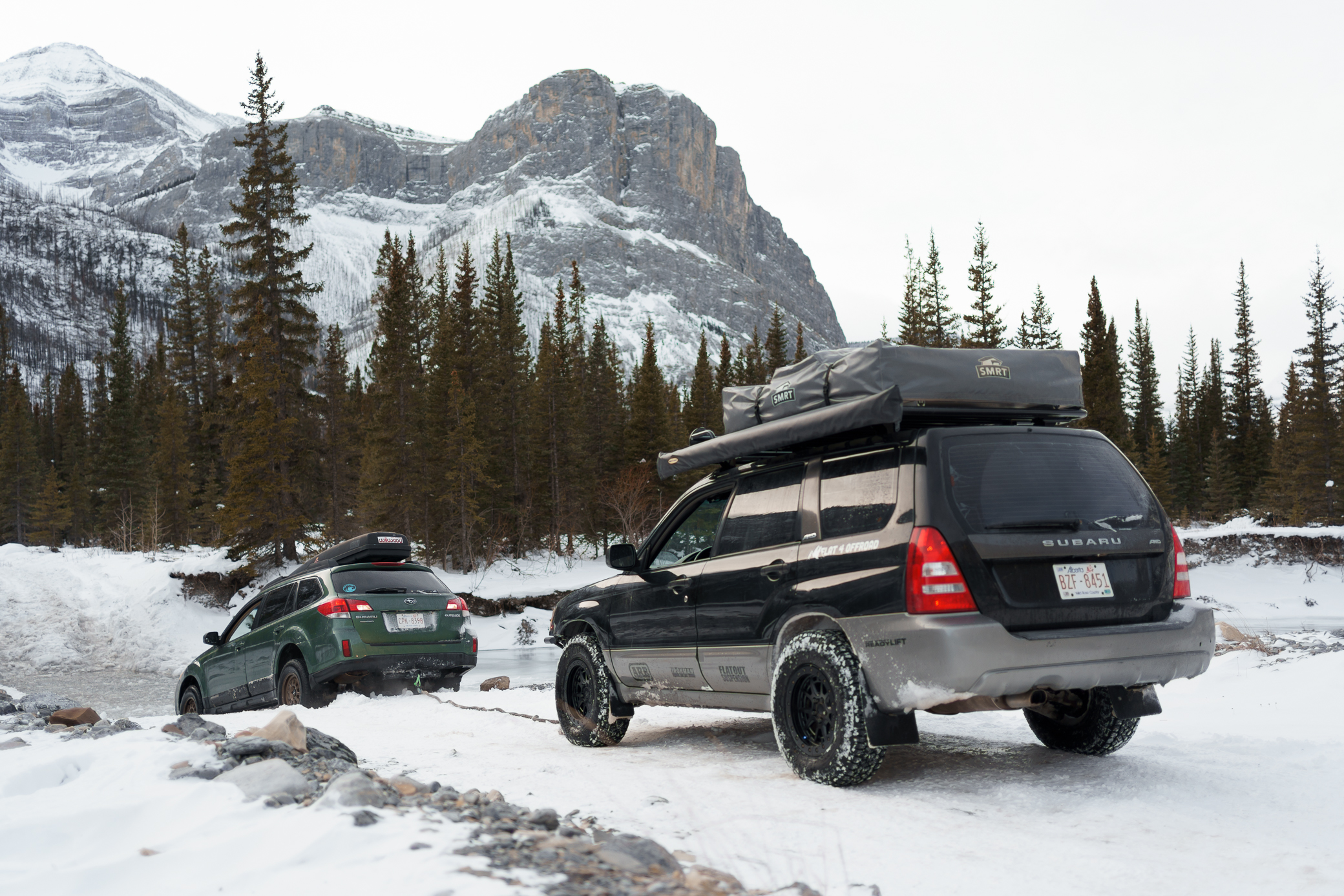
Getting stuck is part of winter adventuring, make sure you have recovery gear. What matters is whether you can get yourself out. At minimum, we recommend carrying:
Last but probably most important: the things that keep you safe if you can't get out. Keep these in your Subaru all winter:
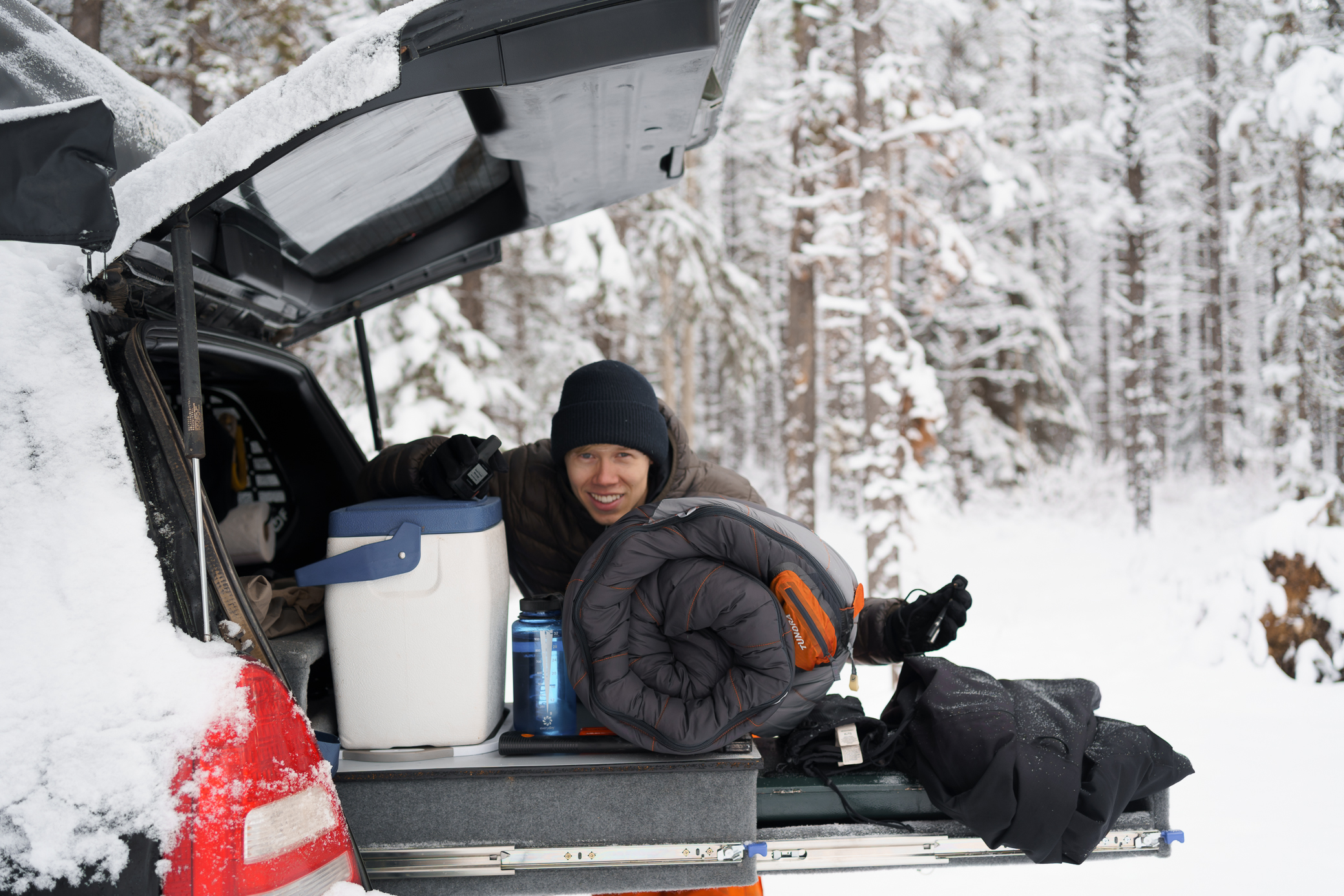
Dry clothes, insulation, a small heat source and some food can be a lifesaver if you end up stuck for a night. If you do burn candles inside the vehicle, crack a window for ventilation.
Your skid plates earn their keep in winter too. Deep, crusty snow and rocks hidden under the snowpack can do real damage to an unprotected underbody. Our Subaru Skid Plates: The Complete Guide breaks down what coverage makes sense for your build.
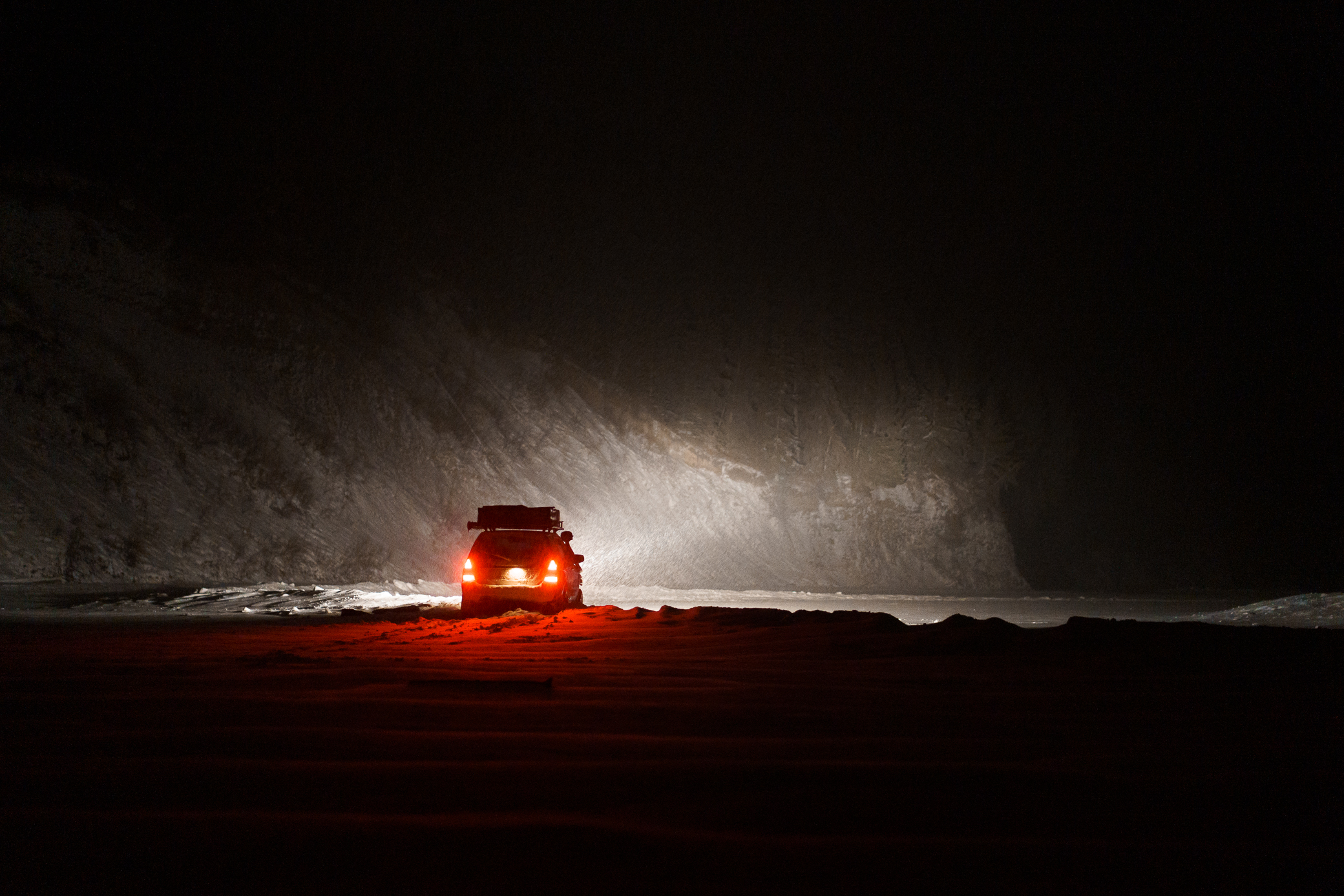
In December you're lucky to get eight hours of daylight in Alberta, so a lot of winter adventures end in the dark. Good auxiliary lighting makes a huge difference, especially on unlit forest roads.
If you're running a rooftop tent, winter doesn't have to be the end of camping season. A well-insulated tent, the right sleeping bag and a good mattress go a long way. Watch for condensation on cold nights, and keep your vents cracked even when it's freezing. Our Rooftop Tent Buying Guide covers what to look for, including insulation liners and ventilation.
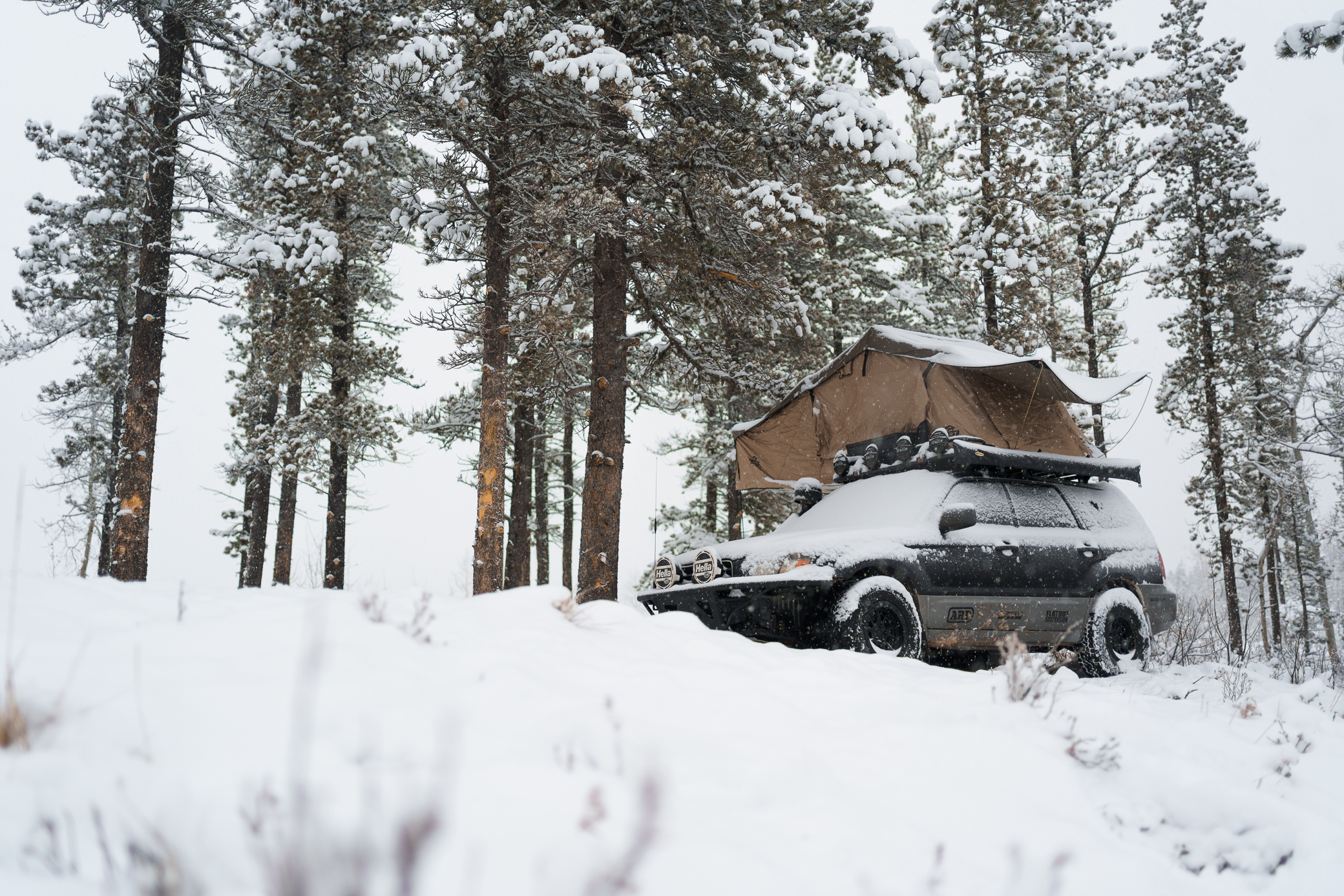
A few extra winter camping tips:
Winter is one of the best times of year to get out in a well-built Subaru, and a little prep goes a long way. Whether you need tires, recovery gear, lighting or a full install before the snow flies, we're here to help.
All our prices are in CAD, with no surprise duty or brokerage invoices later (here's why that matters). Reach out or stop by the shop in Calgary, and we'll help you get your Subaru ready for the snow.
See you out there!