If you're building your Subaru for adventure, skid plates should be on your upgrade list. Ground clearance is great, but it doesn't matter much if a sharp rock punches through your oil pan in the middle of the wilderness. Skid plates are your last line of defense when the terrain gets serious, and choosing the right ones, the right material, the right thickness, the right coverage, makes all the difference between a minor scrape and a really bad day.
In this post, we'll break down what you need to know: the different thicknesses available, what parts of your Subaru need protection, how bumper guards tie into your skid plate setup, and which brands we trust to do the job.
Not all skid plates are built the same, and thickness is the first thing to understand. It's not just about weight, it's about what you're protecting against everything on the trail and how hard you're pushing.
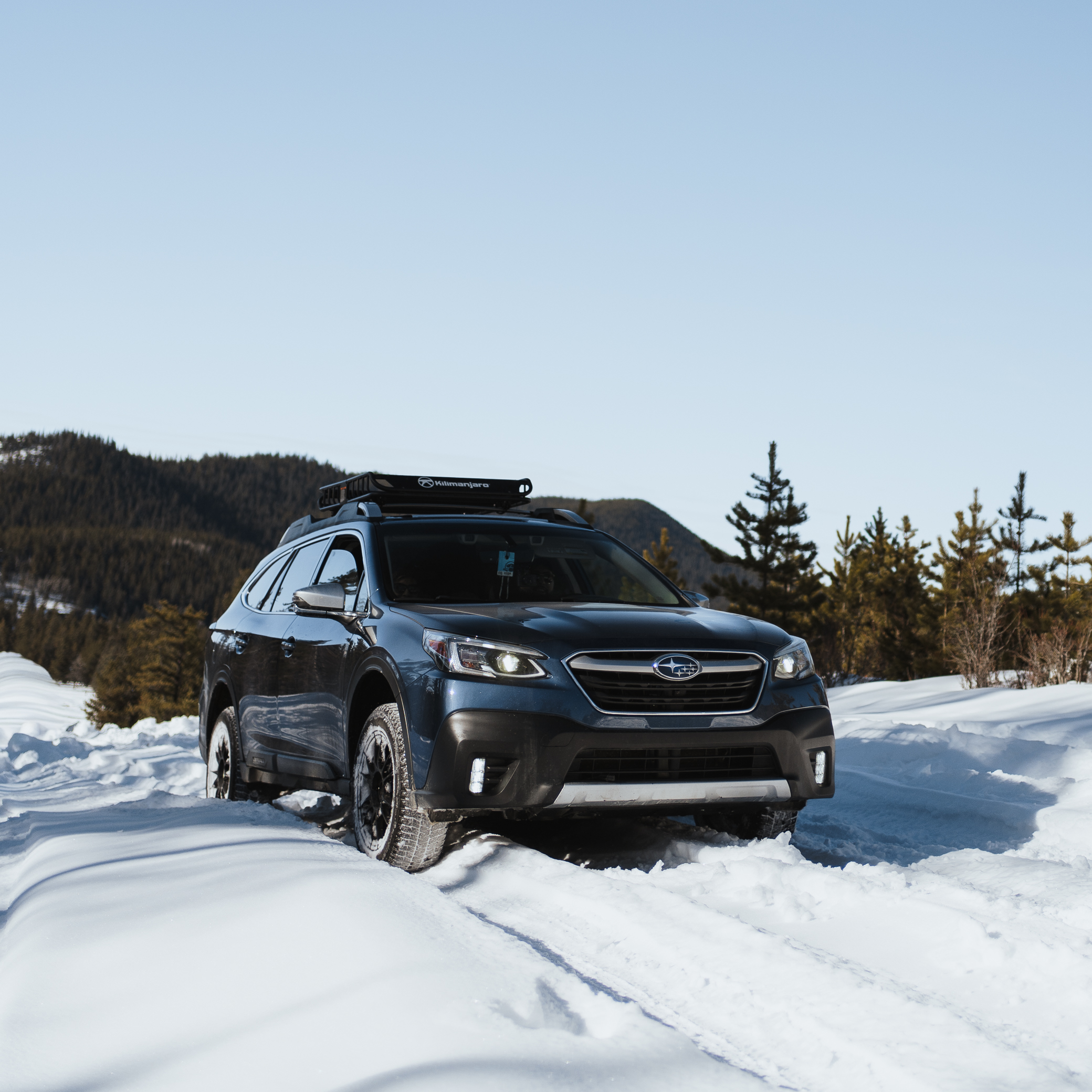
1/8" plates are the entry-level option. They're light, affordable, and offer a peace of mind on the forest service roads, or occasional rocky terrain. They'll deflect branches, gravel wash, and light impacts without adding significant weight to your build, offered mostly by RalliTEK and Primitive racing on some older models.
Best for: Explorers and light trail drivers who want basic underbody protection without sacrificing efficiency. Think gravel logging roads, snowpack, and rutted tracks.
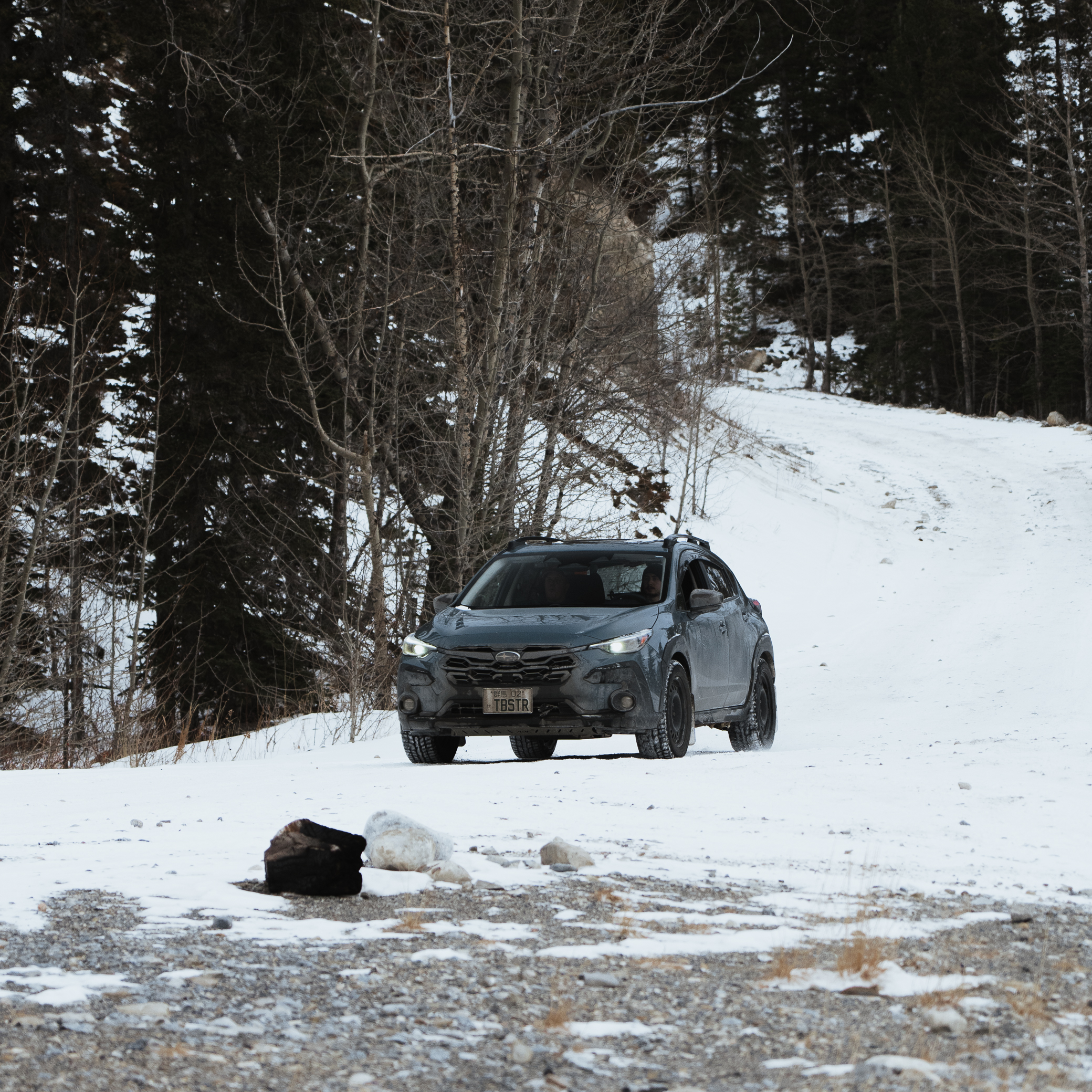
3/16" is the sweet spot for most Subaru builds. It's the thickness used by LP Aventure and Primitive Racing for a reason, it's proven in real-world Canadian conditions. You get serious protection from rocks, stumps, and drops without loading your front end with unnecessary weight. This is what we recommend for the majority of people and anyone who ventures off maintained roads regularly.
Best for: Overlanders, weekend warriors, and anyone running a lifted build with moderate to aggressive trail use.
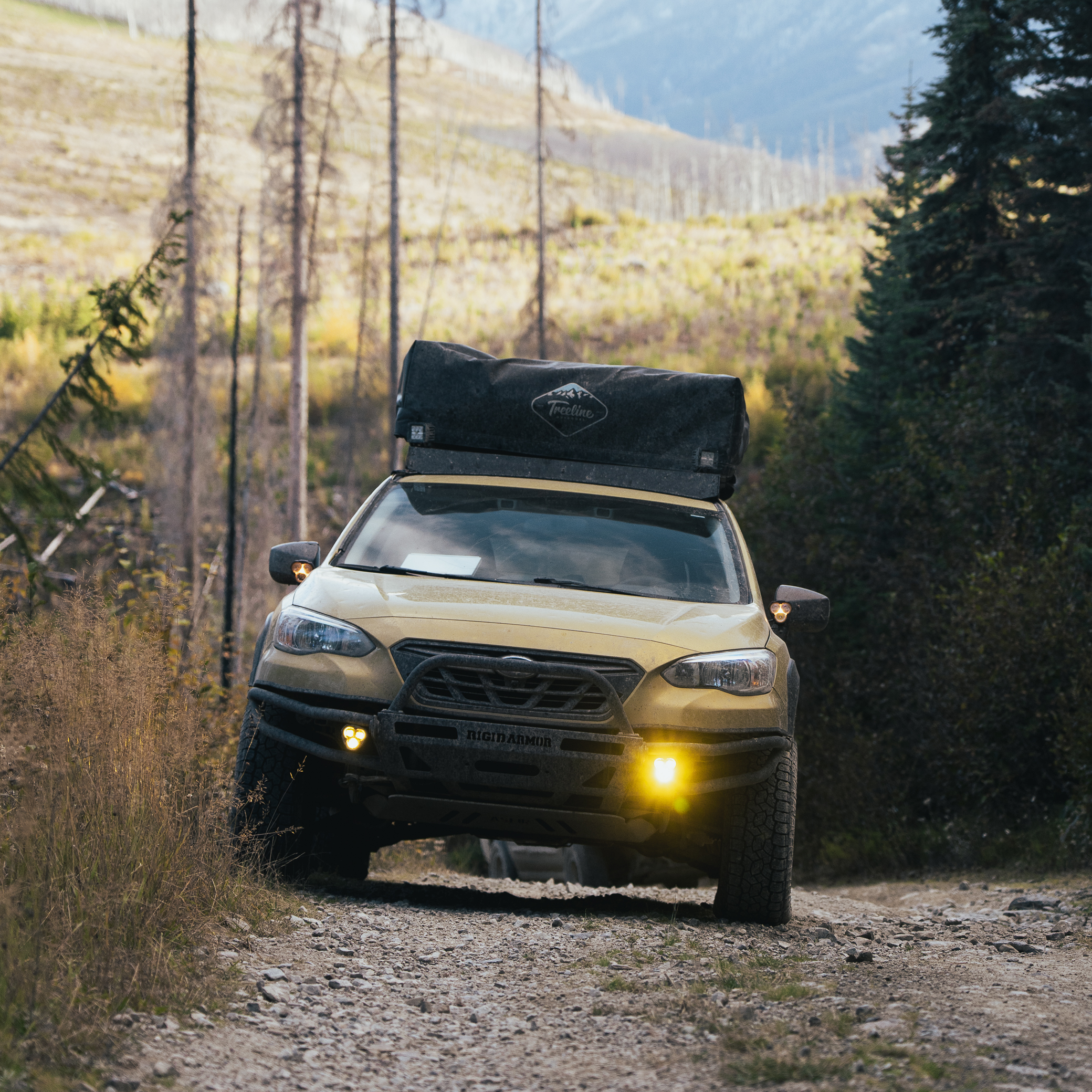
1/4" is for the Trailblazer builds. If you're crawling over rocks and pushing the limits on terrain where you expect consistent hard impacts, this is the level of protection you need. ASFIR 4x4 and RalliTEK build their skid plates at this level, purpose-built for serious terrain.
Best for: Aggressive trail builds and rock crawling. Not wondering if you're going to hit your skid plates, but when.
Subarus have several vulnerable components hanging beneath the chassis. Here's how to think through coverage from front to back.
The engine skid plate is the most critical piece. Your oil pan sits low up front, and one hard hit can end your trip and leave you stranded in the middle of nowhere. It's the first plate to install, and the last one you want to skip.
Just behind the engine, your transmission or CVT is another prime target on rocky terrain. A dedicated transmission skid extends your coverage rearward and protects one of the most expensive components on the car to replace.
The rear differential tends to sit low and takes glancing blows on rough terrain more often than most people expect. Especially on older Foresters with lower ground clearance, it's a common point of contact. A rear diff plate gives you peace of mind when you're committing to lines that matter.
Often overlooked, the gas tank on a Subaru sits surprisingly exposed. It's made of plastic, and a puncture is both dangerous and trip-ending. A gas tank skid plate is one of the highest value additions you can make to any build, low cost, big peace of mind. While not available on every model, coverage exists for all modern Subaru chassis.
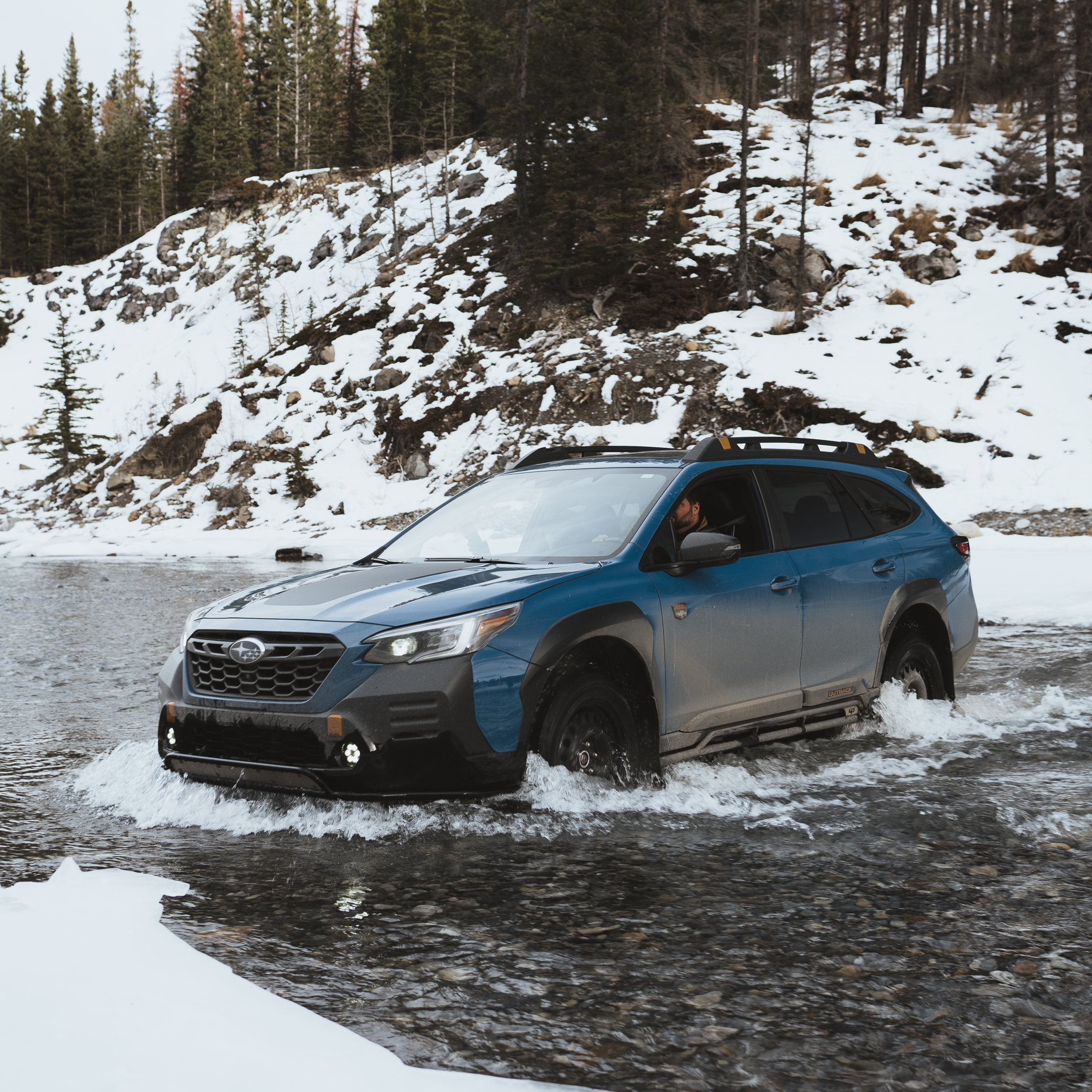
LP Aventure's bumper guards are designed specifically for Subaru platforms, and one of their most practical features is how they tie directly into a complete underbody protection setup. The guards protect the front fascia from damage on approach, and on many builds, the engine skid plate mounts directly to the bumper guard — opening the door to much larger, more capable skid plates than the factory chassis mounting points alone could support.
This matters on the trail because a bumper guard isn't just cosmetic protection. It's a structural foundation for your armor setup, letting you run serious coverage that wouldn't be possible on a stock front end.
Not every Subaru needs every skid plate on day one, here's a simple way to think about it:
Explorer build: Start with an engine skid plate. It's the highest-risk component and the most affordable place to begin. Even a 1/8" or 3/16" plate here gives you meaningful protection on light trails and gravel roads.
Overlander build: Add a transmission skid plate and a rear differential plate. At this level, you're pushing further into the backcountry and spending more time on uneven terrain. Full 3/16" coverage across engine, transmission, and tank is the target.
Trailblazer build: All available skid plates, tied into a front bumper guard or high-clearance bumper system. At this level, you're treating the underside of the vehicle like armor, because it is.
Skid plates aren't glamorous, but they're what keep your build running when the trail gets real. The right combination of thickness and coverage depends on where you drive, how often, and how hard, and we're always happy to help you put together the right setup for your specific rig.
Whether you need a single engine plate to get started or a full ASFIR kit for a Trailblazer build, we've got you covered. Browse our Bumpers and Armor collection or reach out directly and we'll help you figure out exactly what your Subaru needs!