A rooftop tent is one of the most impactful upgrades you can make to an adventure-ready Subaru. It changes how you camp, how far you go, and how quickly you can set up and get moving. But it's also a significant investment and the wrong choice can cost you weight capacity, fitment issues, or a setup that doesn't match how you adventure.
This guide covers everything you need to know before you buy.
The first decision is tent type, and it's the one that affects everything else.
Soft shell tents are the traditional style, a folded fabric shell that unfolds and props open with hoops. They're generally more affordable, offer more interior space for the footprint, and give you flexibility in how you configure the sleeping area. The trade-off is setup time (typically 5–10 minutes), and they're more susceptible to wind noise compared to a hard shell.
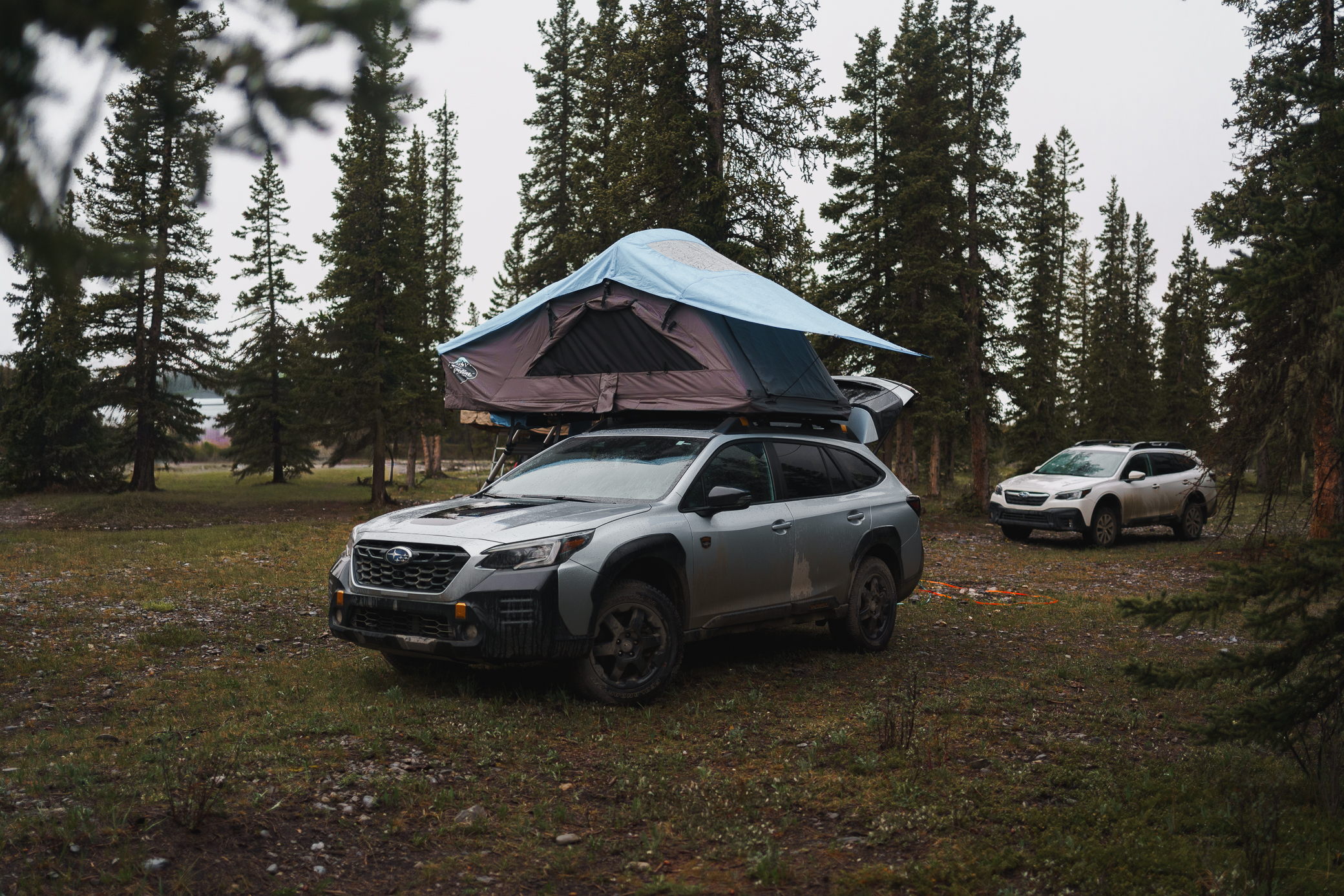
Hard shell tents use a rigid clamshell design that opens in seconds and closes just as fast. They're the better choice if you're moving camp frequently and dealing with unpredictable weather. The downside is cost: quality hard shells carry a premium, and the interior space is typically more compact.

For most overlanders doing multi-night trips, a hard shell is worth the investment. If you're primarily base camping and moving less often, a soft shell gives you more room and more budget flexibility.
Rooftop tents are most commonly sized by sleeping capacity. Here's a practical breakdown:
2 person tents- The best fit for solo adventurers or couples who want to keep weight and footprint manageable. These are the most common option for Subaru builds because they balance capacity and rack compatibility well.
3 person tents - Offers more sleeping room. They're better for taller sleepers, couples who want extra space, or occasional use with a dog. Weight increases meaningfully, so check your rack and vehicle roof rating before committing.
3-4 pseron tents - Family size tents that have large-footprint builds. They're possible on some Subaru setups but require careful weight management and a high-capacity roof rack system to ensure the rack is rated for them.
Our general recommendation for Subaru builds: size for comfort, not capacity, and tents are often over-rated . A 3 person tent for a copuple beats a cramped 2 person fit every time.
This is where Subaru owners need to pay particular attention. Subaru roofs have a dynamic load rating (weight while moving) that's lower than the static load rating (weight at rest). Most factory Subaru roofs are rated around 150–165 lbs dynamic. When you add a quality roof rack, that capacity increases, but the rack, the tent, your sleeping gear, and any additional cargo all count toward that number.
A typical rooftop tent ranges from 100 to 200+ lbs depending on type and size. Here's a practical rule of thumb:
Before purchasing, confirm your roof rack's dynamic load rating, not just the rack's maximum capacity. A rack rated for 400 lbs static may only be rated for 165 lbs at highway speed, and that's the number that matters most on the trails.

Once you've settled on type and size, here's what separates a good tent from a great one:
Fabric quality - Look for 600D ripstop polyester or better on soft shells, and double-walled aluminum construction on hard shells. This affects durability, condensation control, and long-term resilience in variable conditions.
Mattress - Most rooftop tents today ship with a 2" foam mattress, and for the majority of people that's perfectly comfortable. Where it starts to matter is if you're a side sleeper, you may find that density becomes more important than thickness, and a denser foam will support you better than a thicker, softer one. If you know you're a picky sleeper, it's worth looking into aftermarket mattress options before assuming you need to upsize the tent.
Ventilation - Condensation is a real issue, especially on cooler Alberta nights. Tents with multiple vents or mesh window panels and heater ports manage it significantly better than single-vent designs. This is an easy thing to overlook when comparing specs but it makes a noticeable difference in comfort.
What's included - This is one of the biggest differentiators between budget tents and quality ones, and it's easy to miss when you're comparing price tags. A bare-bones tent gets you the shell and a ladder. A well-specced tent from a brand like Go Overland comes with built-in LED lighting, a window installation kit, a weatherproof cover, and other thoughtful inclusions that you'd otherwise be sourcing and adding yourself. When you factor in the cost of those extras, the value gap between a budget option and a quality tent often closes fast.
Go Overland Canada is one of the most well-regarded RTT brands in the Canadian overlanding market, and for good reason, their lineup is designed for the conditions we actually deal with here: variable weather, cold nights, and remote terrain. We carry their tents at Flat 4 Offroad, and they're one of the brands we recommend most consistently to Subaru owners across Alberta and BC.
A big part of why we recommend them is what comes in the box. Both tents below ship with an interior LED light strip, a detachable winter insulation liner, four windows including a skylight, and an add-on awning, all included. That's a meaningful difference compared to budget options where those extras cost extra.
Go Overland Equinox - The Equinox is a hard shell tent with a 45-second setup, a 600 lb capacity, and a sleeping surface of 79" x 47". At 115 lbs it sits in a manageable weight range for most Subaru platforms, and the included winter liner makes it a genuine three-season to four-season option depending on your setup. If you want a reliable, well-specced tent that works out of the box without a lot of additional purchases, the Equinox is where we'd start most people.
Go Overland Expedition Mini - The Expedition Mini is the compact hard shell option for Subaru owners who want maximum sleeping space in a smaller footprint. Despite the "Mini" name, the open dimensions are 83" x 63" x 47" with a 80" x 60" mattress, genuinely comfortable for two people. It also has an 800 lb capacity and a close 60-second setup as the Equinox. It's a strong choice if you're prioritizing sleeping comfort over a smaller closed profile, or if you're running a smaller rack setup.
If you want to see how these tents look on a real Subaru build, check out the our adventures we've run Go Overland tents on both the Forester and STI builds and documented the setup process in detail.
Every build is different. The right tent depends on how you camp, how often you move, what rack you're running, and what your rig can carry. If you're not sure where to start, reach out, we've spec'd RTT setups on a lot of Subaru platforms and we're happy to work through it with you before you commit to anything.
Browse our full selection of Go Overland Canada rooftop tents at Flat 4 Offroad and get out there.